


Project Overview
Sunway TaihuLight is a supercomputer developed by the National Research Center of Parallel Computer Engineering and Technology and installed at the National Supercomputing Center in Wuxi.
The system comprises 40,960 domestically developed SW26010 many-core processors. Each processor uses a proprietary 64-bit Sunway instruction set, delivers a peak performance of 3.168 trillion operations per second, and operates at a core frequency of 1.5 GHz.
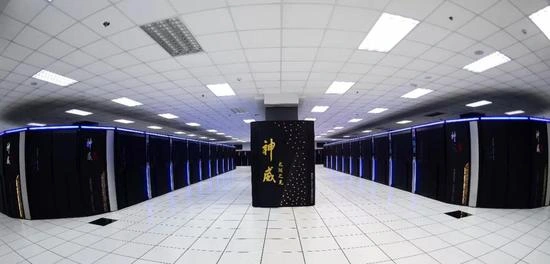
In July 2020, the University of Science and Technology of China achieved the first parallel first-principles simulation using ten million cores on Sunway TaihuLight.
Project Scope
Deliver additional energy savings beyond the existing energy-saving control system.
Optimize coordinated equipment control and system control setpoints.
Project Benefits
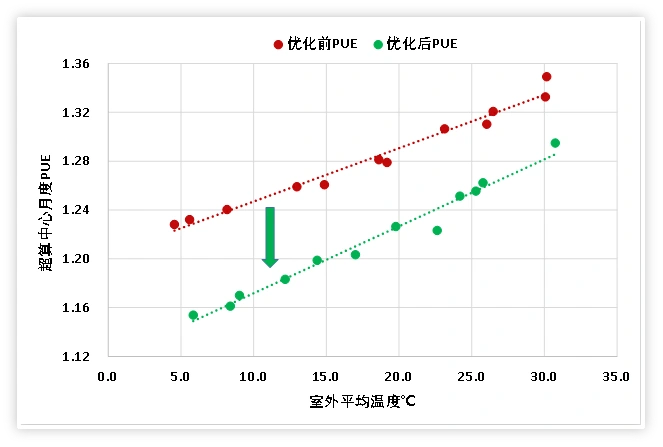
The project achieved an annual electricity savings rate of 24%, saving over 4.1 million kWh per year and reducing annual system PUE from 1.28 to 1.21.
The National Supercomputing Center in Wuxi houses and operates Sunway TaihuLight. Its domestically developed SW26010 many-core processors deliver a peak performance of 3.168 trillion operations per second per processor, placing stringent demands on the stability of the server room environment and energy infrastructure. Energy optimization must improve coordination between the cooling plant and associated equipment while maintaining reliable computing operations.
PUE Optimization at the Supercomputing Center
Further Optimization of the Existing Energy-Saving System
The project built on the existing energy-saving controls by refining coordinated equipment control and system setpoints. Systematic adjustments to equipment operating combinations and control parameters improved the overall efficiency of the cooling plant and related energy equipment.
Coordinating Equipment Control and Setpoints
Coordinated equipment control determines which units operate, while control setpoints determine how they operate. Optimizing both within a unified framework helps reduce mismatches between individual equipment operation and overall demand, aligning cooling performance more closely with the center’s actual operating conditions.
Energy Savings Results
According to the original article, the project achieved annual electricity savings of 24%, exceeding 4.1 million kWh per year, while annual system PUE fell from 1.28 to 1.21. These figures follow the reporting basis of the original WeChat case study and demonstrate improvements in energy efficiency and operational management.
Relevance to High-Performance Computing Facilities
For supercomputing centers, AI data centers, and large conventional data centers, energy system optimization affects both operating costs and the stability of the computing environment. This project provides a practical reference for improving coordinated equipment control and setpoints within existing systems.

