


Project Overview
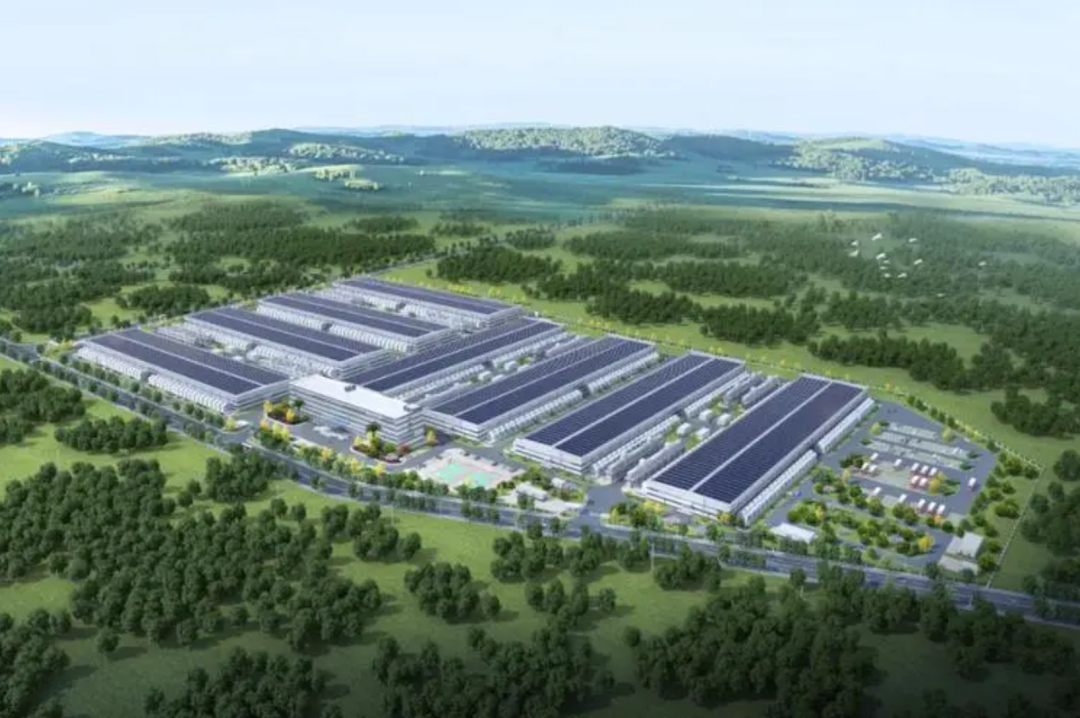
Tencent’s Qingyuan Data Center is located in Qingxin District, Qingyuan. Covering more than 26.7 hectares, the campus comprises eight IT buildings, with a planned capacity of 300,000 servers. Once completed, it will serve hundreds of millions of internet users across southern China.
Project Scope
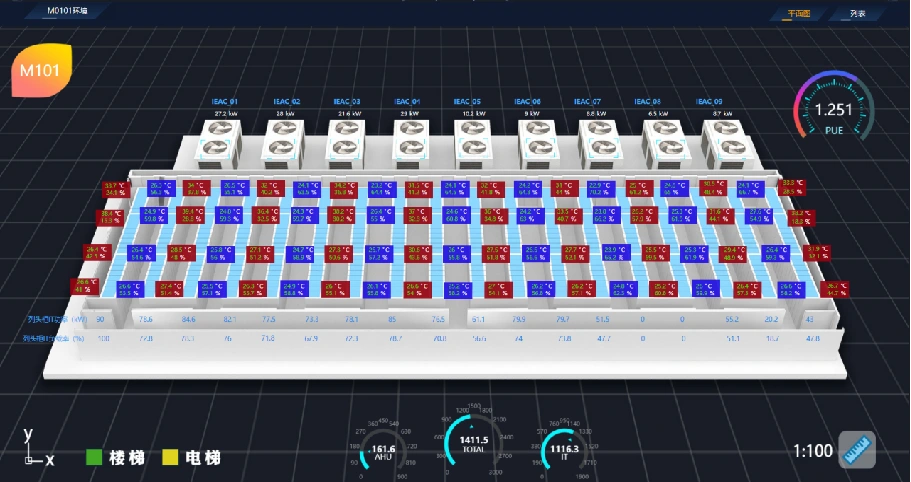
The project covers 18 indirect evaporative cooling units in Rooms 101 and 103 of Phase 3-1 at the Qingxin campus. The units operate according to recommended settings from an intelligent optimization platform, with 11,057 monitoring points providing operational data.
Project Benefits
Intelligent data analysis and energy-saving control based on server room energy consumption and equipment efficiency.
A reduction in CLF of more than 13% through demand-based cooling allocation and proactive adjustment of key setpoints.
Practical deployment of AI energy-saving technology, establishing a foundation for future campus-wide rollout.
As the campus expands, coordination between cooling equipment, indirect evaporative cooling units, and server room loads becomes increasingly complex. Fixed setpoints cannot adequately accommodate every operating condition.
Intelligent Optimization Scope
18 Indirect Evaporative Cooling Units
The platform connects 18 indirect evaporative cooling units in Rooms 101 and 103 of Phase 3-1. Equipment follows the platform’s recommended settings, allowing operating strategies to adapt to actual server room conditions.
11,057 Monitoring Points
A total of 11,057 monitoring points provide data on equipment status, server room conditions, and energy consumption. This comprehensive operational visibility helps the platform identify system changes and develop optimization strategies.
Demand-Based Cooling and Setpoint Optimization
Guided by server room energy consumption and equipment efficiency, the system allocates cooling according to demand and proactively adjusts key setpoints to coordinate cooling supply and terminal equipment.
According to the original article, the project reduced CLF by more than 13%, demonstrating the practical application of AI energy-saving technology in data centers.
Potential for Campus-Wide Deployment
This project demonstrates how data center optimization can expand from individual rooms to large-scale campus deployment. A unified framework for data collection, analysis, and control provides a replicable digital foundation for energy management across multiple IT buildings.

