


Project Overview
At the start of the new year, Zenergy (03677.HK), a leading Chinese power and energy storage battery manufacturer, attracted capital market attention with a positive profit announcement. The company projected year-on-year net profit growth of nearly 800% for 2025, setting a new growth benchmark for the industry over the same period.
With competition intensifying and market advantages increasingly concentrated among leading battery manufacturers, Zenergy’s performance less than a year after its listing points to growth drivers beyond market recovery.
In its earnings forecast, Zenergy highlighted the introduction of AI-driven closed-loop processes to improve production efficiency and cost control, with economies of scale supporting higher gross margins.
These changes extend to specific production system upgrades. The intelligent cooling plant retrofit at its Changshu facility in Jiangsu provides a clear example.
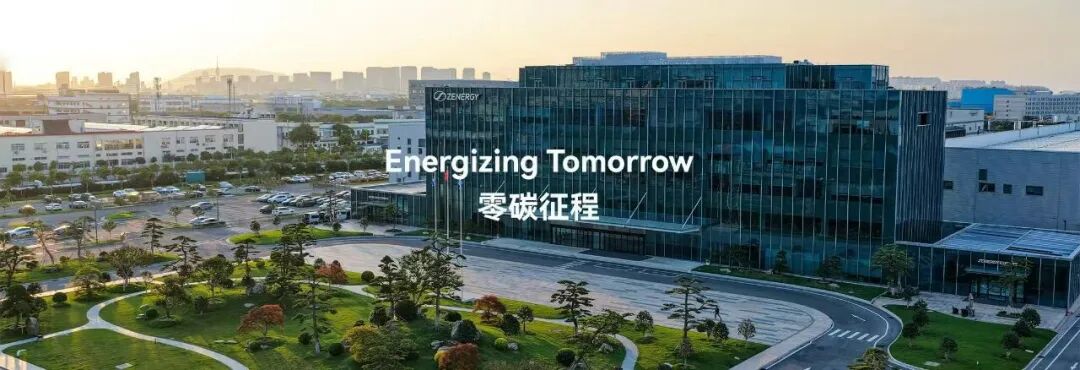
A Hidden Energy Giant
Stable temperature and humidity are essential to power battery manufacturing. Cell consistency, yield, and safety depend heavily on reliable environmental control.
At Zenergy’s Changshu facility, the central cooling system consumes more than 10 million kWh annually, making it the site’s largest energy consumer. It comprises four chillers, four chilled-water pumps, and multiple cooling-water pumps and cooling towers. All pumps and cooling tower fans support variable-speed control, providing a foundation for energy-efficient operation.
However, Deepctrls’ on-site assessment identified several operational bottlenecks that prevented the system from realizing its full efficiency potential.
1. Relatively Fixed Chiller Sequencing
Regardless of demand, the system typically operated either one large and one small chiller, or two large chillers and one small unit. Additional capacity was brought online only when the load approached 98%.
2. Inefficient Water Distribution
Chilled-water pumps ran at high frequencies of 40–45 Hz, yet the supply–return temperature difference was only 3.5°C, below the design requirement. This increased distribution energy consumption.
3. Limited Heat Rejection Efficiency
Cooling tower fans operated at approximately 48 Hz year-round. Missing inlet valves allowed some water to bypass effective cooling and recirculate, impairing chiller heat rejection and increasing electricity consumption as temperatures rose.
4. Gaps in the Existing Building Automation System
Key data—including flow, real-time power, coefficient of performance (COP), and electricity consumption—could not be read correctly. Header temperature and flow measurements were unreliable, historical operating trends were inaccessible, and chiller electricity meters were not connected to the communications network.
As a result, critical decisions such as chiller staging and temperature settings relied heavily on operator experience, limiting the ability to adapt to changing weather and production loads.
Giving the System a PhyAI-Powered Brain
Deepctrls equipped the existing system with DeepSYS, an intelligent optimization platform powered by PhyAI. Through system-wide modeling and coordinated control, the platform unlocks the efficiency potential of installed equipment and minimizes total cooling system energy consumption.
The cooling plant is modeled as an integrated whole. Operating data supports individual performance models for chillers, pumps, cooling towers, and water circuits. An 8,760-hour simulation using annual wet-bulb temperature data identifies optimal equipment strategies across different environmental conditions and loads.
PhyAI and intelligent optimization algorithms perform coordinated system calculations every second. While strictly maintaining process safety and cooling requirements, the platform continuously determines the best combination of operating parameters, including:
Number of chillers in operation.
Chilled-water leaving temperature.
Number and operating frequencies of chilled-water and cooling-water pumps.
Number of cooling towers and fan operating frequencies.
This enables coordinated operation across chillers, pumps, and cooling towers while protecting production processes.
For example, when outdoor temperatures fall, the system can reduce cooling tower output to save fan energy. Although this may slightly increase chiller demand, total system energy consumption and operating costs are lower.
From Experience-Based Operation to Intelligent Control
Following implementation, the Changshu cooling plant is expected to achieve overall energy savings of 15.5%, saving more than 1 million kWh annually. Chiller and pump optimization are major contributors.
The platform also changes how the system operates. Continuous, automated optimization coordinates chillers, pumps, and cooling towers around the clock under varying conditions, reducing reliance on operator experience.
Equipment runtime management and efficiency monitoring allow the platform to allocate operating duties dynamically based on accumulated operating hours and real-time performance. It issues timely warnings when efficiency declines or abnormal conditions arise, giving the facilities team greater visibility and control.
Zenergy’s production upgrades illustrate the structural benefits of improving manufacturing efficiency. With pressure to meet carbon targets and reduce costs, conventional industrial energy systems still offer substantial optimization potential.
Advanced manufacturing can achieve meaningful gains by applying AI and physics-based modeling to existing infrastructure. Targeted upgrades can unlock significant energy value with minimal retrofit costs.
As production systems become more automated and intelligent, business growth is increasingly driven by efficiency alongside capacity expansion.

