


Project Background
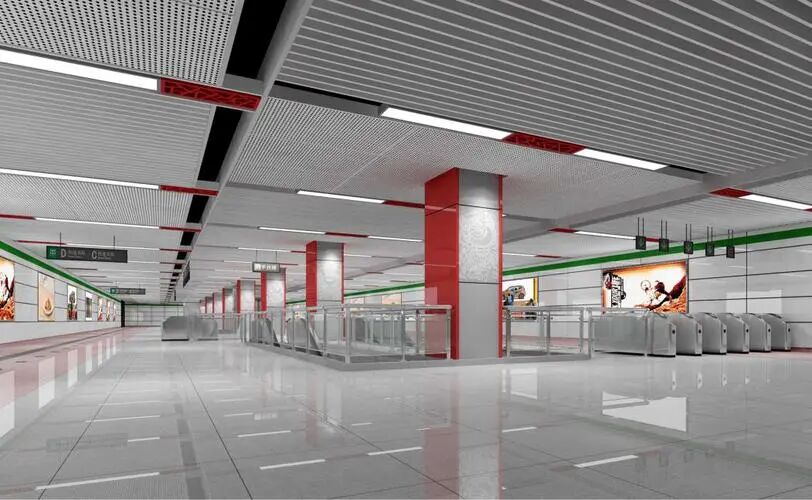
Caiqiao Station on Chengdu Metro Line 4 has a total cooling load of 1,312 kW and uses a station-level cooling system. Its air system is an all-air system with single-stage return-air mixing. Water-cooled chillers are housed in a dedicated plant room, with coordinated control of the water system.
Passenger traffic, outdoor weather, and equipment operating conditions change continuously. The HVAC system must respond to actual demand while maintaining passenger comfort and equipment safety.
Upgrade Approach
The project introduced an integrated air-and-water energy optimization system combining real-time data with physics-based modeling. It brings both systems into a unified control framework, considering chiller efficiency, terminal air handling, chilled-water distribution, and cooling-side operation to match cooling output dynamically to station demand.
Coordinated Air and Water Control
The air system delivers conditioned air throughout the station, while the water system supplies cooling. Because the two systems interact, adjusting one independently can increase energy consumption in the other. Coordinated control balances airflow, water flow, and cooling plant operation while meeting environmental requirements.
Combining Real-Time Data with Physical Constraints
The platform uses live operating data and cooling system physics to identify changing conditions and optimize control settings. The physics-based framework defines operating boundaries, while real-time data captures current conditions. Together, they improve control stability and explainability.
Independently Verified Energy Savings
Comparative testing by a third party, conducted in accordance with national standards, measured energy savings of 49.07%. The results demonstrate how coordinated air-and-water control can reduce unnecessary energy consumption across the system and provide measurable evidence for energy-efficient metro station HVAC operation.
Wider Application in Rail Transit
Metro stations operate for long hours, experience substantial changes in occupancy, and rely on complex equipment systems. This project demonstrates how real-time data, physics-based models, and coordinated control can improve existing water-cooled HVAC systems. It provides a practical reference for other stations, transit hubs, and large public buildings seeking to reduce HVAC energy consumption.

