
DeepCtrls × JinkoSolar Vietnam: Cooling Optimization Saves Millions in Annual Electricity Costs
Published: 2026-5-13
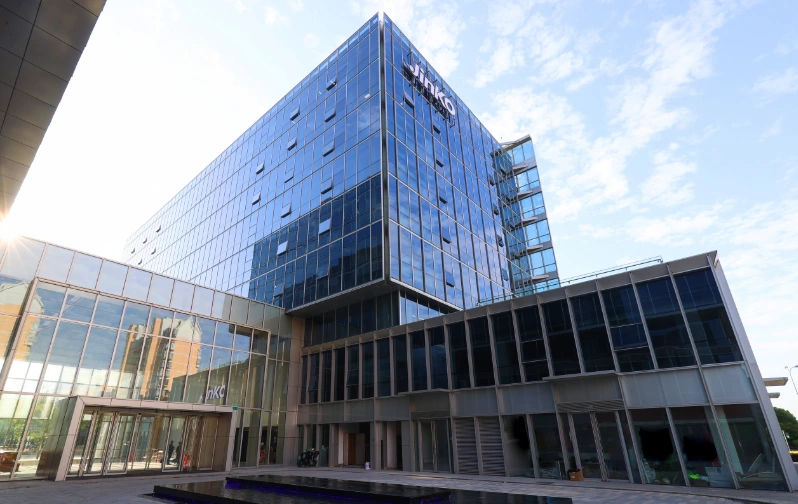
JinkoSolar’s Vietnam solar cell manufacturing base is a key hub in the global production network of this leading photovoltaic manufacturer. Responsible for large-scale production and worldwide supply of advanced solar cells, it supports global deliveries and photovoltaic supply chain stability across Belt and Road markets.
The cooling plant is critical to maintaining a precision manufacturing environment. Its operation has traditionally prioritized stability: once production requirements are met, settings are rarely adjusted. This can leave the system operational but below optimal efficiency for extended periods.
Using its PhyAI technology, DeepCtrls developed an AI-powered platform for system-wide cooling optimization at JinkoSolar’s Vietnam facility. Building on existing energy management practices, the project achieved energy savings of over 7% and annual electricity cost savings exceeding RMB 2.77 million, setting a new benchmark for energy efficiency upgrades in advanced manufacturing overseas.
The Efficiency Ceiling of Energy-Intensive Systems
The cooling plant comprises 11 water-cooled centrifugal chillers, multiple variable-speed chilled-water and cooling-water pumps, and cooling towers. Its low- and medium-temperature water systems serve precision process equipment, including make-up air unit (MAU) recooling sections and dry cooling coils (DCCs). High year-round cooling loads result in substantial energy consumption.
The initial assessment identified three major challenges:
Experience-based control: Fixed chiller supply-water temperatures, persistently high pump speeds, and cooling tower control based solely on leaving-water temperature prevented coordinated operation, keeping the system outside optimal operating conditions.
Excessive distribution energy use: Small supply–return water temperature differences, excessive flow rates, and fixed fan speeds resulted in unnecessary pumping and air distribution energy consumption.
Disconnected demand and supply: Changes in end-use loads were not accurately communicated to the cooling plant in real time.
JinkoSolar’s annual data showed cooling plant electricity consumption of 73.519 million kWh, with chillers accounting for more than 71%, indicating substantial energy-saving potential.
PhyAI Transforms Cooling Plant Control
Conventional cooling optimization often focuses on individual parameter adjustments. Although these can deliver quick gains, they soon reach their efficiency limits without achieving system-wide optimization.
Through its DeepSYS energy optimization platform and proprietary PhyAI technology, DeepCtrls implemented autonomous, system-wide optimization supported by a complete cycle of modeling, simulation, optimization, decision-making, execution, and feedback.
1. Dynamic Control Replaces Fixed Parameters
Chilled-water leaving temperature, cooling-water control ranges, and pump speeds are dynamically adjusted at millisecond intervals in response to changing loads, weather, and equipment conditions. The system recalculates the optimal operating combination every second.
2. Coordinated AI Decisions Optimize Overall Energy Performance
Chillers, pumps, and cooling towers are brought into a unified simulation environment. AI evaluates operating strategies against overall system energy efficiency to identify the optimal approach.
For example, moderately increasing cooling tower output consumes slightly more fan energy but can substantially reduce chiller condensing pressure and total chiller energy use. DeepSYS consistently implements such strategies 24/7, maintaining a level of precision that is difficult to sustain manually.
3. End-Use Data Closes the Control Loop
Integrating data from MAUs, DCCs, and other terminal equipment enables real-time load feedback and dynamic supply matching. The cooling plant shifts from experience-based fixed settings to precise cooling delivery based on actual demand.
Water flow is continuously adjusted around the optimal temperature difference to reduce unnecessary distribution energy. Cooling towers respond jointly to environmental changes and chiller efficiency.
Implementation required no production shutdown or disruption. Seamless integration with the existing building automation (BA) system maintained production safety and stable energy system operation throughout the upgrade.
Financial, Environmental, and Operational Benefits
The project transformed cooling plant operation by replacing fixed parameters with dynamic AI calculations and operator-led decisions with coordinated, system-wide optimization. The plant evolved from conventional reactive operation to proactive, continuously improving PhyAI control, delivering sustained energy savings.
1. Energy and Cost Savings
Building on JinkoSolar’s rigorous energy management, the project achieved annual overall energy savings of more than 7%. Annual electricity savings exceed 5.14 million kWh, translating into over RMB 2.77 million in annual cost savings at a tariff of RMB 0.54/kWh.
2. Improved System Efficiency
Coordinated operation across chillers, pumps, cooling towers, and terminal equipment continuously improves the cooling plant’s coefficient of performance (COP). The system adapts its strategies in real time to changes in load, weather, and production schedules, supporting ongoing efficiency improvements.
3. More Efficient Operations and Maintenance
Round-the-clock intelligent monitoring, anomaly warnings, and automatic optimization substantially reduce manual intervention. Maintenance efficiency improves, equipment operates more reliably, and service life is extended.
This project marks another successful deployment of DeepCtrls’ DeepSYS platform at an overseas facility operated by a leading photovoltaic manufacturer. It also demonstrates the reliability and broad applicability of Physical AI in hot, humid climates and continuous precision manufacturing environments.
For JinkoSolar, the benefits extend beyond lower electricity bills. The project turns energy infrastructure from a passive cost center into an active contributor to operational efficiency, establishing replicable, scalable capabilities for sustained energy savings across its global facilities.
As manufacturers face growing cost pressures and low-carbon operations become increasingly important to competitiveness, DeepCtrls will continue using PhyAI to improve energy performance at overseas facilities. Combining intelligent energy control with predictive maintenance, the company aims to establish further benchmarks for energy efficiency in advanced manufacturing.
