
L4.5 AI Liquid Cooling: Advancing Energy Efficiency in AI Data Centers
Published: 2026-7-20
Key Liquid Cooling Challenges in AI Data Centers
At the opening of the 2026 World Artificial Intelligence Conference (WAIC) in Shanghai, DeepCtrls showcased its full portfolio of Physical AI energy efficiency products at Booth H1-D734. Under the theme “Reshaping Global Computing and Energy Infrastructure with Physical AI,” the company addressed the energy challenges accompanying rapid AI growth.
On July 18, Deepctrls globally launched its L4.5-level AI liquid cooling control platform and joined CAICT, Foxconn Industrial Internet, Chindata, China Unicom, and other industry partners to initiate the Artificial Intelligence for Green Computing white paper.
Through technology innovation and industry collaboration, Deepctrls is using AI to optimize the energy infrastructure that powers AI itself, advancing data center and industrial energy systems toward greater efficiency, sustainability, and autonomy.
Global Launch of an L4.5-Level AI Liquid Cooling Platform
As large AI models evolve, power demand per rack is exceeding 200 kW, pushing air cooling toward its physical limits. Liquid cooling is becoming essential to next-generation computing infrastructure.
However, existing liquid cooling systems face persistent challenges: excessive primary-side energy consumption, delayed responses to computing workloads, difficult-to-detect leaks, and inadequate coolant degradation management. These limitations threaten the long-term stability of AI clusters containing tens or hundreds of thousands of accelerators.
Built on the proprietary PhyAI energy intelligence engine and L5-level DeepChip industrial edge control platform, Deepctrls’ L4.5 solution combines physics-based models with deep learning to create a closed loop of sensing, prediction, decision-making, and execution.
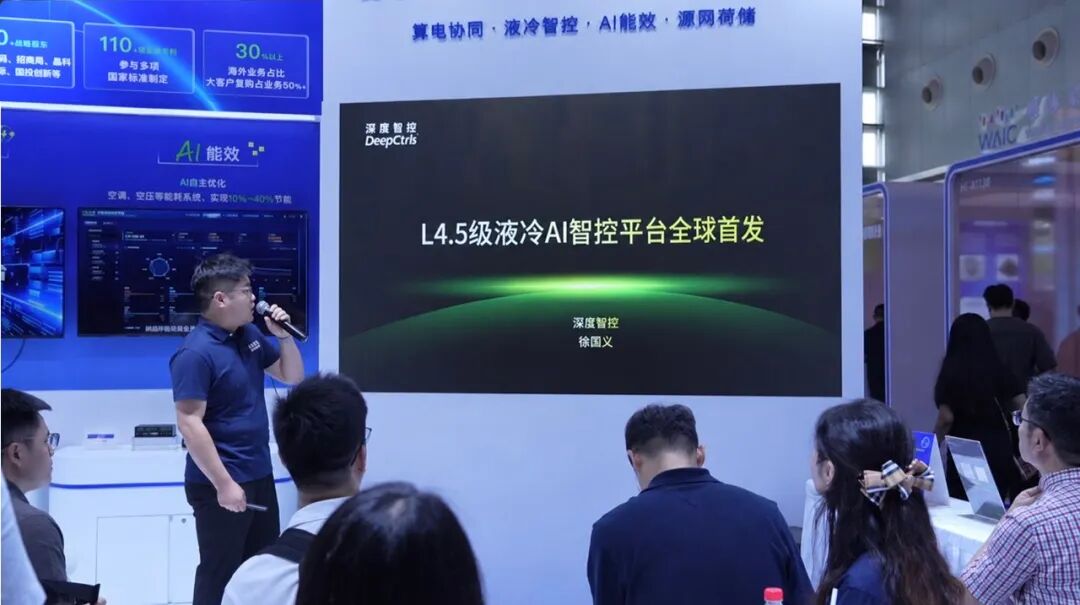
The platform delivers four core capabilities:
System-wide energy optimization through AI algorithms.
Proactive thermal management through load forecasting.
Intelligent leak-risk warnings through multisource sensing.
Predictive maintenance through health monitoring.
These capabilities advance liquid cooling from manual management to proactive, AI-driven prediction and control, providing a safe, efficient, and reliable cooling foundation for high-density AI data centers.
Launching a Green Computing White Paper with Industry Partners
Expanding computing capacity is driving higher electricity demand. CAICT estimates that, under a high-growth scenario, China’s computing infrastructure could consume more than 700 billion kWh annually by 2030. Improving infrastructure intelligence through AI has become an essential industry priority.
At WAIC, Deepctrls joined CAICT, Foxconn Industrial Internet, Chindata, China Unicom, and other partners to launch the Artificial Intelligence for Green Computing white paper initiative, exploring technologies and practical approaches for AI-enabled green computing.
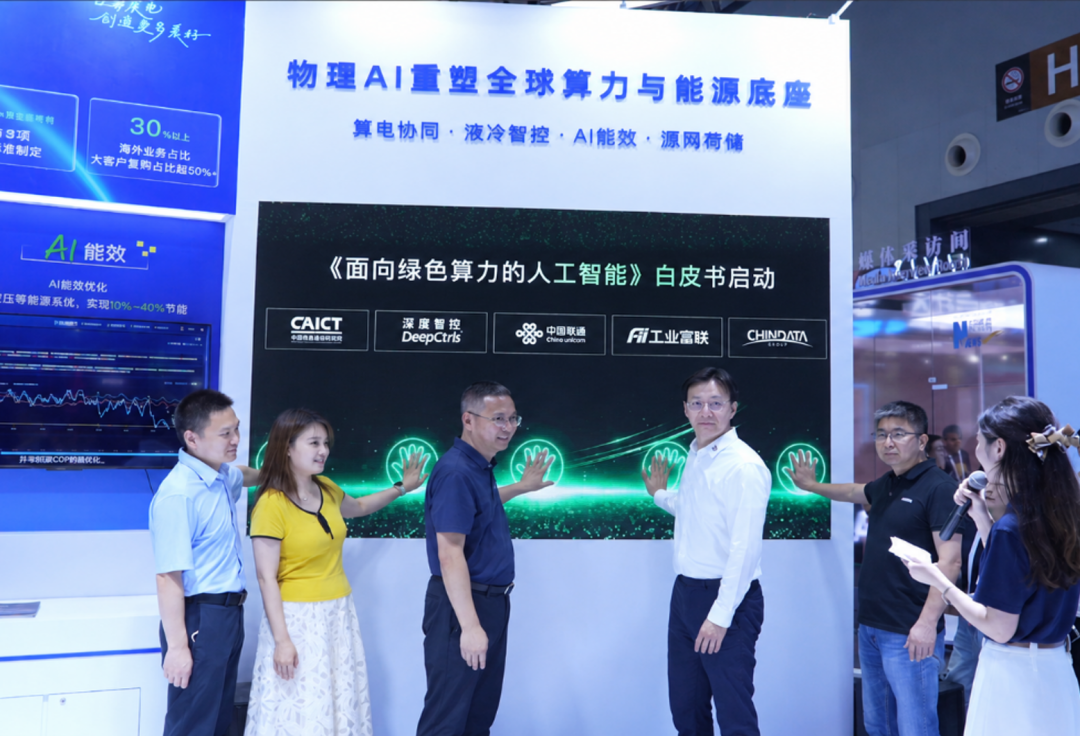
Participants in the launch ceremony included:
Liu Zongchang, Chief Data Officer and General Manager of the Technology Services Business Group, Foxconn Industrial Internet.
Li Mingjiang, Chief Operating Officer, Chindata Group.
Li Huibin, Deputy General Manager of the Infrastructure Operations Center, China Unicom Shanghai.
Yang Bing, Senior Technical Supervisor, Data Center Department, CAICT.
The white paper will examine intelligent liquid cooling, computing–power coordination, AI-driven energy optimization, and predictive maintenance. It will document engineering methodologies and benchmark deployments of Physical AI, outlining practical approaches to sustained PUE reduction and coordinated computing–power optimization.
The contributors will connect industry, academia, research, and application to develop technology maps, implementation guidelines, and industry insights. These resources will support greener data centers and AI clusters while advancing coordinated management of computing, electricity, and carbon emissions.
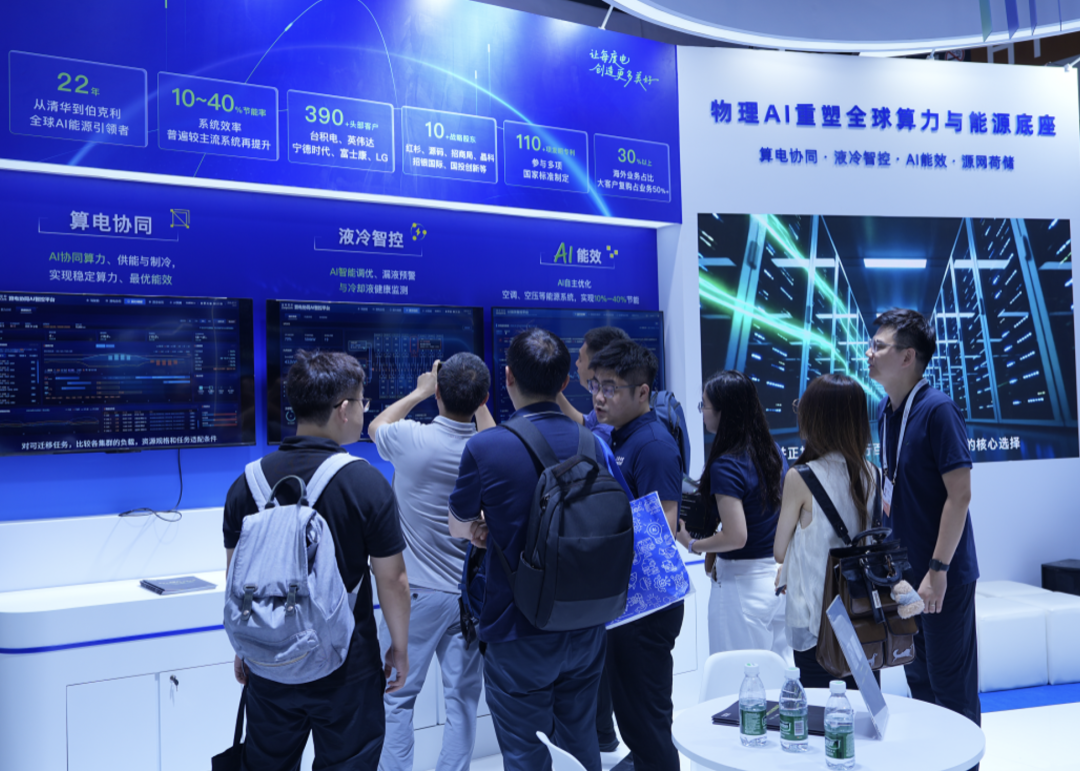
A Full Physical AI Product Portfolio for Intelligent Infrastructure
Alongside the liquid cooling platform, Deepctrls showcased its AI platform for generation–grid–load–storage coordination and DeepBot, an L4.5-level energy efficiency agent. Together, these products demonstrate Physical AI applications spanning computing infrastructure cooling and integrated campus energy management.
Drawing on data from more than 390 leading enterprises and 300,000 industrial devices, the PhyAI energy intelligence engine continuously evolves to optimize cooling, heating, and electricity systems together. It provides an intelligent control foundation for data centers, zero-carbon campuses, and advanced manufacturing.
Deepctrls will continue advancing Physical AI to help global AI infrastructure overcome energy constraints and operate more efficiently, sustainably, and autonomously, contributing Chinese innovation to the long-term development of the AI industry.
