
DeepCtrls × InnoLight: AI for AI—Energy Efficiency for the Computing Boom
Published: 2026-7-1
As the world debates the AI revolution, InnoLight is building the infrastructure that powers it.
A global leader in high-speed optical transceivers, InnoLight supplies core hardware to AI data centers worldwide through its flagship 800G and 1.6T products and close relationships with customers including NVIDIA and Google. Its production lines operate at full capacity year-round.
High-speed optical transceivers are precision components whose quality depends directly on environmental stability. Temperature fluctuations exceeding 0.5°C can affect production yield, making precise temperature and humidity control essential. Cooling plants must therefore remain stable and continuously available, creating substantial energy demands.
InnoLight’s cooling plant consumes more than 5.62 million kWh annually, accounting for nearly 80% of the factory’s electricity use. As global AI computing demand surges and production capacity expands, energy consumption and operating costs continue to rise. As the facilities team explained, saving energy is straightforward; doing so without disrupting production is the real challenge.
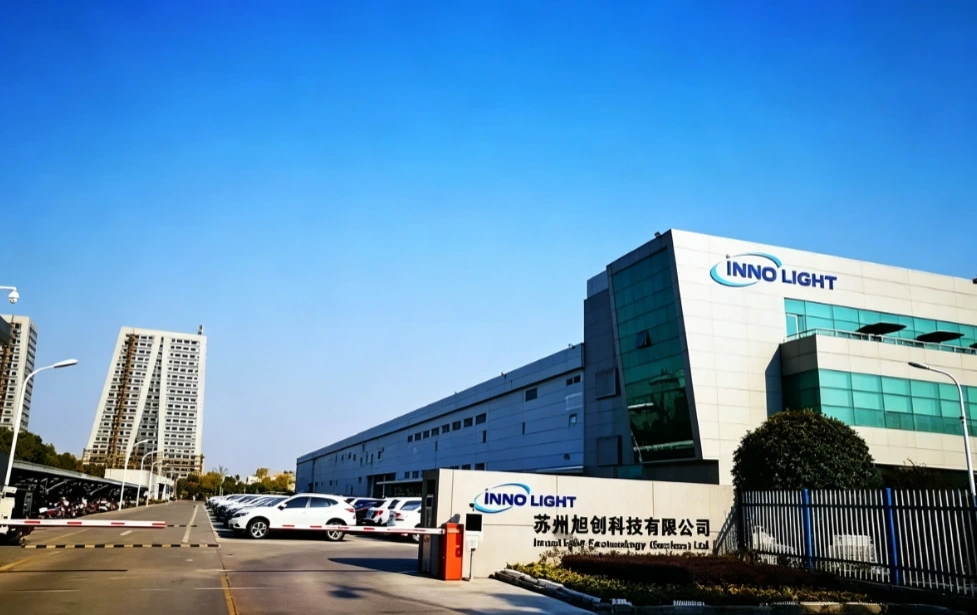
During its assessment, DeepCtrls found that the cooling plant already outperformed most industrial installations. Individual equipment settings had been tuned to conventional best-practice levels. The remaining savings lay primarily in the interactions between equipment: Which chillers should operate together? Could supply-water temperatures adjust dynamically? Could slightly higher cooling tower consumption deliver greater chiller savings? Operator experience alone could no longer answer these questions.
To unlock further improvements, DeepCtrls deployed DeepSYS, an intelligent energy optimization system combining physics-based frameworks with AI. Tailored to InnoLight’s facility and energy requirements, it autonomously optimizes operations to minimize total cooling plant energy consumption through three core strategies:
Precise sensing of end-use demand: Differential pressure sensors track actual workshop cooling requirements in real time to prevent overcooling. Chilled-water supply temperatures are dynamically raised to 8.5–9°C, reducing the refrigeration workload on chillers.
Coordinated cooling-side and heat-rejection optimization: Cooling-water temperatures are maintained within the optimal range to reduce chiller condensing losses. Cooling tower and fan output adjust dynamically, trading a small increase in tower energy use for substantial chiller electricity savings.
Fine-tuned variable-speed pump control: Chilled-water and cooling-water pumps adjust their operating frequencies according to real-time temperature differences, reducing energy consumed during unloaded or inefficient operation.
The upgrade was implemented with zero production downtime risk. DeepCtrls operates alongside the existing FMCS, with electrical and software interlocks and one-click switching between standard and energy-saving modes.
After commissioning, the partners conducted 24-hour comparative testing during periods with closely matched outdoor conditions and identical production output. Throughout testing, workshop temperature, humidity, cleanliness, and product yield remained stable, with no impact on order fulfillment.
The results showed 7.41% overall energy savings, totaling 1,992.97 kWh over 24 hours and meeting InnoLight’s requirements. Chiller energy consumption fell by 10.8%, chilled-water pump consumption by 24.7%, and cooling-water pump consumption by 3.6%. Cooling tower consumption increased slightly to achieve lower cooling-water temperatures, consistent with the strategy of minimizing total system energy use.
Projected across a full year at full production capacity, the project saves more than 400,000 kWh and approximately 300 tonnes of carbon emissions annually.
InnoLight’s optical transceivers support global AI computing growth, while DeepCtrls uses Physical AI to continuously optimize the energy systems behind their production. AI is creating greater computing demand and energy consumption—and is now helping optimize the energy infrastructure that supports its own development. This is the meaning of DeepCtrls’ “AI for AI” approach.
DeepCtrls has extended this approach to other leading companies across the AI supply chain, including Shennan Circuits, Foxconn Industrial Internet, CXMT, and TSMC, with deployments across electronics manufacturing, semiconductors, data centers, and other energy-intensive sectors.
As AI pushes the boundaries of computing, energy efficiency is becoming a new source of competitive advantage. Through system-wide, autonomous AI optimization, electricity use is precisely managed. AI for AI is emerging as a practical response to the energy challenges of the computing boom.
